Here’s a breakdown of the crypto market from last week:
Bitcoin Wraps Up “Uptober” at $110K 📉
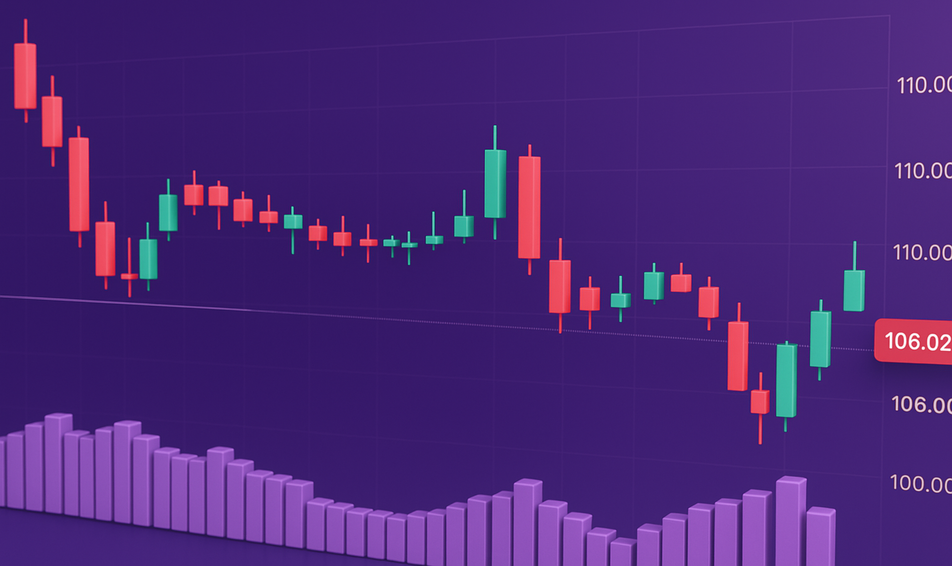
Bitcoin seems to be taking this “calm before the storm” saying a bit too literally. After hitting an all-time high price of $126,000 from its “Uptober pump,” the OG crypto spent last week doing next to nothing, just moving between $110K and $112K. By the weekend, it quietly settled back at $110K, the same spot it held last week. That’s some stablecoin energy there 😅.
Why the pause? Analysts point to two major reasons. First, a recent meeting between US President Donald Trump and China’s President Xi Jinping raised hopes of a US–China trade deal after the initial trade wars. According to Trump, overall tariffs on Chinese goods would drop by 10%. However, traders remain uncertain of a future tax war.
Also, the US Federal Reserve signalled that its latest interest rate reduction at the end of October might be the last one this year. Usually, high interest rates create a pessimistic sentiment towards risky assets like cryptocurrencies.
But while Bitcoin’s chilling, “Rich Dad Poor Dad” author, Robert Kiyosaki, has come out with a “prophecy” that Bitcoin could hit $200K by the end of 2025. So maybe Bitcoin is just loading another epic bull sprint.
Just remember that prophecies don’t always come with guarantee notes. A 100% increase within a month is a bit wild, but it’s the crypto market, and we allegedly all have opinions.
Ethereum Falls Below $4,000 Again, While Altcoins Go Deeper 🔻
Like Bitcoin, the Ethereum (ETH) price did a back-to-back slip below $4,000. As of the time of writing, ETH has dipped by over 5% to around $3800, mirroring the overall market sentiment after the Fed’s tone.
Virtually all altcoins have also followed in Ethereum’s footsteps. Over the past week:
- Ripple’s XRP dropped 4.9% to $2.51
- Solana (SOL) slipped 7.4% to $184.53
- Dogecoin (DOGE) fell 9.59% to $0.1839
- Cardano (ADA) lost 10.89% at $0.6017
Note: These price updates are from the time of writing and may have changed
Ironically, despite the price dip, Ethereum is quietly stealing the spotlight from Bitcoin among the men in suits (AKA institutional investors), and the numbers don’t lie. Over the past year, ETH fund holdings among big-money players have surged 138%, compared to Bitcoin’s modest 36% growth during the same period.
Of course, retail traders are giving the charts a bombastic side-eye, but institutional investors aren’t flinching. Ethereum maxis like Tom Lee of Bitmine keep accumulating, suggesting that the recent dip is just a pause before a strong year-end rally.
If these institutional inflows keep coming in, maybe Ethereum could lead the next major jump for crypto, proving once again that sometimes, the quiet ones make the loudest moves.
Stablecoins Hit $300 Billion Market Cap as Adoption Grows 🚀
While everyone’s been glued to the possibility of Bitcoin reaching a new all-time high, stablecoins have quietly been doing the real heavy lifting in the background. According to Lookonchain, the total stablecoin market cap has hit $303.5 billion (as of October 30th), up a massive 50% from $202.8 billion at the start of the year.
Leading the charge as usual is Tether (USDT), sitting pretty with $188.4 billion, followed by Circle’s USDC with $76.3 billion. Together, the two account for more than 85% of the stablecoin market.
The world might celebrate Bitcoin’s big moments, but stablecoins are moving the crypto economy massively now. Whether it’s for traders looking to convert USDT to their local currencies, businesses testing blockchain payments, or fintechs exploring faster cross-border settlements, the “boring” coins are doing not-so-boring numbers in the crypto market.
And the best part? The demand is only growing. So next time someone calls stablecoins “boring” because they aren’t jumping up and down like Bitcoin or Ethereum, just remind them that the boring stuff is where the big money moves now.
Disclaimer: This content may cause extreme FOMO (Fear of Missing Out). Side effects of investing include sudden wealth (or, you know, the opposite 😢).
Please do your own research (DYOR) or speak to your financial advisor before making any decisions.