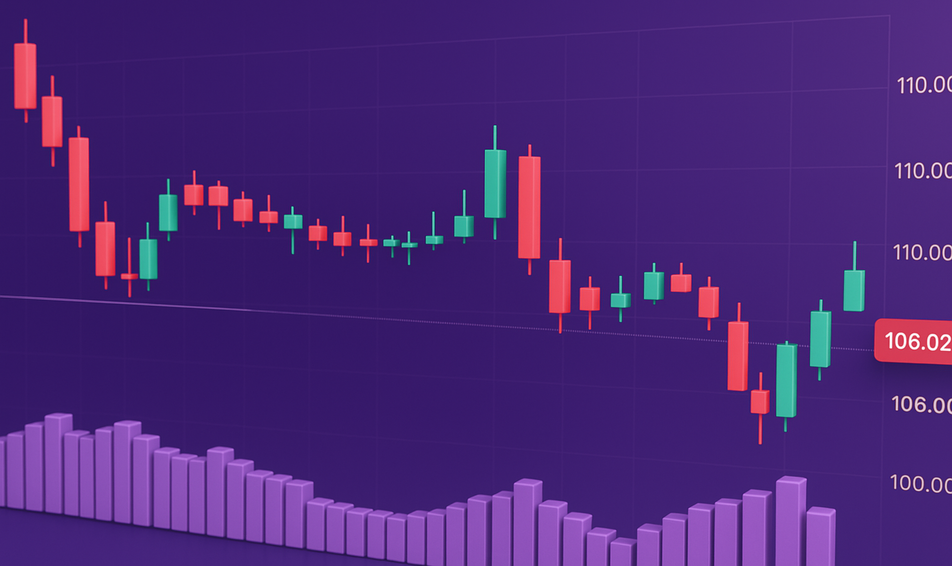
In 2025, Bitcoin hit new highs, institutions doubled down on crypto, but it was a year of more than price changes. Here’s your crypto 2025 in review and what 2026 looks like:
The Year Crypto Joined the Real World 🌏
More than anything, 2025 was the year crypto started behaving like part of the global economy.
Bitcoin and Ethereum ETFs (exchange-traded funds) became normal portfolio holdings for retail and institutional investors. In fact, companies like Michael Saylor’s Strategy and Tom Lee’s BitMine Immersion Technologies also became top Bitcoin and Ethereum treasuries 🏢.
We also saw the rise of real-world asset (RWA) tokenisation, allowing people to convert tangible assets, such as real estate and gold, into digital assets.
However, that shift came with consequences. Once crypto tied itself to the macro world, it began moving in sync with the same rhythms. Any news about interest rates, labour data, liquidity expectations, and political headlines impacted crypto. That explains why the market caught a cold a few times after President Donald Trump or the Federal Reserve sneezed 🤧. So, it became impossible to ignore the news.
Bitcoin’s High Point and Lower Grind 📊
Bitcoin still delivered its headline moment, reaching a new all-time high around $126,000 in October 🚀. Continuous ETF demand, post-halving trends of new highs after 12-18 months, and broader market optimism all contributed to driving up BTC’s price.
However, the rally didn’t stick around for long.
As trade wars resurfaced between the US and other countries, including China and Canada, capital grew more cautious, inflows slowed, and then reversed. What followed wasn’t a dramatic crash, but a slow, grinding pullback. By late November, Bitcoin had dropped more than 30% from its peak to around $88,000, moving in line with yields, the US dollar, and continuous interest rate expectations.
In short, Bitcoin didn’t fail in 2025 — it just moved like the global risk asset it has become.
Not Just Bitcoin, But Other Asset Classes 🧩
Elsewhere, the market told smaller, messier stories.
Some ecosystems ran hot early in the year, then cooled sharply when conditions tightened. Others peaked later and faded more slowly. Speculative assets, including memecoins, AI-themed tokens, and autonomous agents, delivered moments of chaos and excitement, but little consistency.
At the same time, more serious conversations returned, as privacy tokens, regulation, surveillance, and conversations around regulatory control deepened. That tension shaped parts of the market in quieter but meaningful ways.
The Real Progress Happened With Stablecoins 💴
While prices moved upwards, sideways, or lower, fundamentals kept improving, and one word on almost everyone’s lips was “Stablecoins.”
In 2025, stablecoins experienced a record-breaking year, processing around $50 trillion in total transaction volume, proving their usefulness again and again, especially for cross-border payments and holding dollar value. Regulatory clarity in the U.S., such as the GENIUS Act, helped remove long-standing uncertainty, opening the door for wider institutional use.
In Nigeria, the Securities and Exchange Commission said it’s open to stablecoins, and regulated stablecoin experiments, like the Compliant Naira (cNGN), a Naira-pegged digital token, came to life.
Overall: A Strong Start, Pulled Back By Reality 📉
The first part of 2025 showed strong signals. Liquidity expectations improved. Institutional participation increased. Markets were calmer. Bitcoin and Ethereum traded with confidence, even though their prices weren’t increasing every week.
Under the surface, important things were happening, as stablecoin usage expanded, real-world assets moved on-chain, and infrastructure quietly improved. It wasn’t euphoric, but it felt healthy.
That tone changed later in the year.
Economic data softened. The labour market cooled. A prolonged U.S. government shutdown added uncertainty right when clarity was needed most. Interest rate cuts arrived, but they weren’t strong enough to turn around the slowing market environment. Ultimately, risk appetite faded, and crypto faded with it.
How About Stocks, Gold, and Other Investments 🏦?
Despite hitting a record high during the year, crypto wasn’t the main character of 2025.
Unlike the previous year, AI-heavy tech stocks captured attention 🤖. Gold rallied during geopolitical tension. Treasury bills and bonds delivered steady, low-stress returns that looked attractive in a cautious environment.
For instance, instead of chasing uncertain big yields, some investors preferred low-risk products like Quidax Earn. While Bitcoin has lost nearly 8% in the past year, Earn offers up to 10% interest per year. That means while Bitcoin demands patience and risk tolerance, Earn rewards steadiness with decent returns.
You can also put your money to work in 2026 and earn passive income for short-term goals like rent, a car, or travel, while hoping Bitcoin rallies again.
So, What Does 2026 Look Like 👀?
If 2025 was about integration, 2026 looks like consolidation.
Less spectacle. More execution. Institutional exposure should keep building gradually. Stablecoins and on-chain yield products are likely to expand further into everyday finance.
How about coin prices? They’ll still move, but more likely in response to macro conditions this time. This is why, despite analysts like Michael Saylor holding optimistic views, others are predicting that Bitcoin may drop to $50,000 in 2026.
But that’s their take. What’s yours?
Reply to our last email newsletter and tell us how you think 2026 plays out for crypto.